Your business has income, but some of it isn’t in the bank yet. It’s sitting in a drawer as post-dated cheques from customers – and in the meantime you still have to pay suppliers, staff and the landlord. Business cheque discounting is one way to close the gap between the day you make a sale and the day the money actually reaches you. In this article we explain what cheque discounting is, who it’s for and how the process works with us, step by step.
What is cheque discounting?
Cheque discounting (in Hebrew nikayon tchekim, often spelled nikayon shikim) is a service in which you hand a cheque you received from a customer to a company that provides credit, and get the money before the due date written on the cheque. Instead of waiting weeks or months for the cheque to be paid, your business gets the money at the time of the transaction. When the due date arrives, the cheque is paid to the company that discounted it.
Cheque discounting is a form of business credit, so it’s worth checking who you’re dealing with. Y.D Amigo Ltd (CHANGE) operates under credit provider licence – basic, No. 63112.
Who is business cheque discounting for?
The service is for businesses that get paid by cheque and want more predictable cash flow. For example:
- Suppliers, wholesalers and distributors who sell on shotef plus terms (payment at the end of the month plus a set number of days, such as 30, 60 or 90).
- Contractors and subcontractors who receive post-dated cheques for work they’ve already done.
- Service providers whose business clients pay by cheque.
- Businesses that need cash on hand to buy stock, pay salaries or take up a business opportunity, and don’t want to wait for the due date.
We discount current cheques (dated today or earlier) and post-dated cheques up to 120 days. Every cheque is reviewed on its own merits.
How does it work? 4 steps
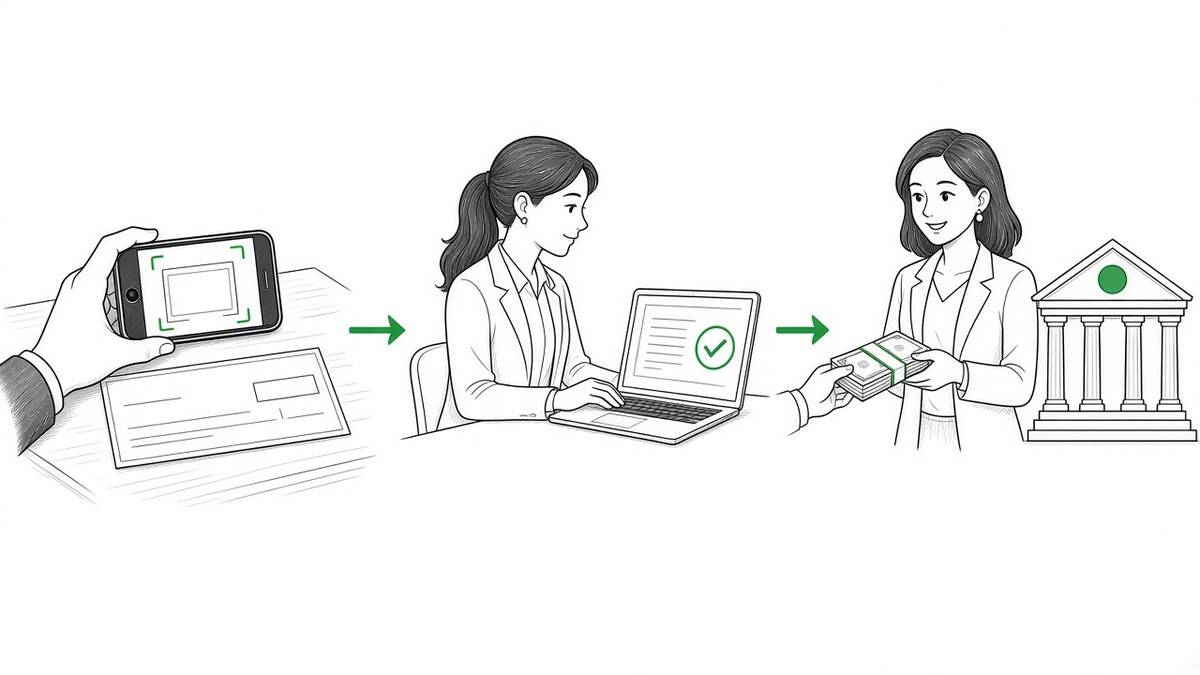
1. Send a photo of the cheque
Photograph the cheque so that all the details are clear (the writer’s name, the amount, the date and the signature) and send it to us on WhatsApp. You don’t need to come to the branch to get an initial answer.
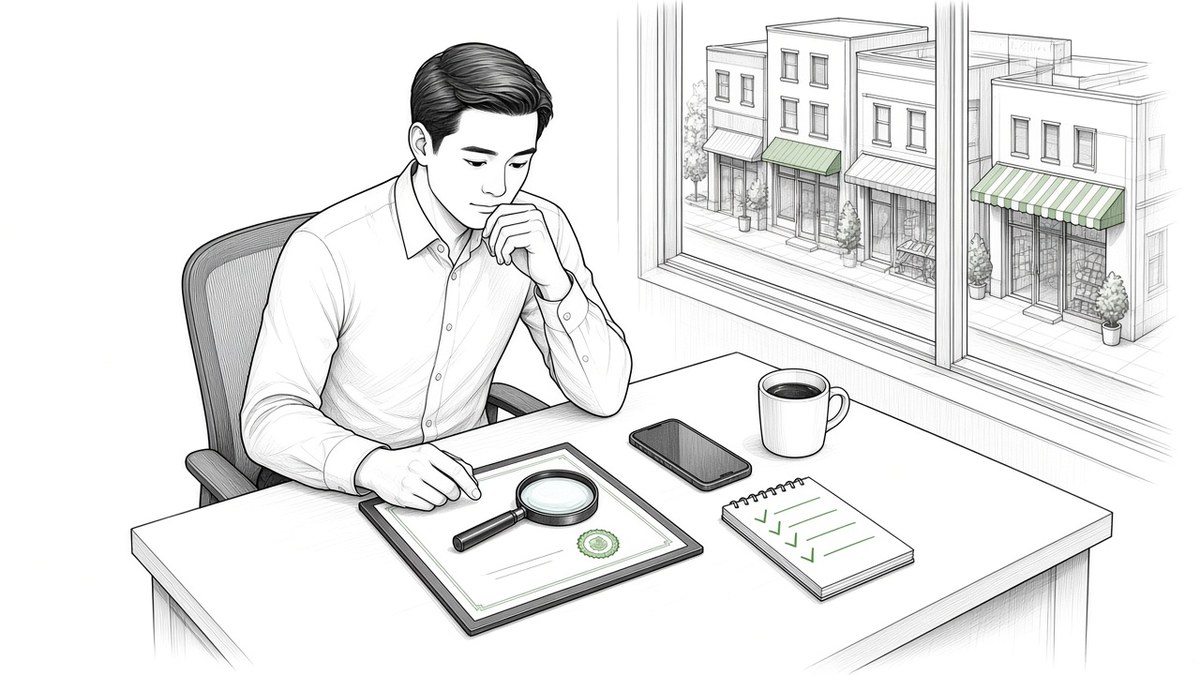
2. Review
We review the cheque and the transaction behind it. The review focuses mainly on who wrote the cheque and the quality of the transaction, not only on your financial history. Subject to review and approval.
3. Approval and arrangements
After the review we’ll get back to you with an answer, explain what to bring and set out the terms of your specific transaction, so you know exactly what to expect before you commit to anything. If you are an authorised signatory of the company the cheque is made out to, you’ll need your Israeli ID card (teudat zehut) or passport, the authorised-signatory resolution, the certificate of incorporation and the cheque.
For the first transaction, the company’s authorised signatory must be identified so we can open a customer file. After that, deals can also be completed with a courier on the company’s behalf, with payment by bank transfer to the company’s account. Handing cash to the company’s courier requires a power of attorney on file with us.
4. Complete the transaction and get your money
You can complete the transaction in one of two ways: come to our branch at Levinsky 52, Tel Aviv, or have our courier come to your business. At the branch, you’re paid at the time of the transaction – in cash, by bank transfer or on a prepaid card (according to the rules set out on this page). With our courier service, payment is by bank transfer only, once the cheque reaches us.
Cash or bank transfer?
You choose how to receive the money. If you prefer a bank transfer, the money goes to your business account. If you prefer cash, here are the rules you need to know:
- A cheque of up to ₪6,000 (inclusive) can be paid out in full in cash, with no need for an invoice, receipt or allocation number. The exemption covers the transaction documents only, not identification: for every transaction you need an Israeli ID card (teudat zehut) or a passport. For transactions over ₪50,000, also bring a second ID document: a passport or a driver’s licence.
- For businesses, a cheque over ₪6,000 and up to ₪25,000 inclusive can be paid out in full in cash against an invoice, a receipt and an allocation number (the number the Israel Tax Authority assigns to the invoice). For a cheque over ₪25,000, you can receive in cash the lower of 10% of the cheque amount or ₪6,000, against the same documents. For a cheque over ₪6,000, cash cannot be paid without these documents.
- Got several cheques? If each cheque is up to ₪25,000 (inclusive) and each has its own invoice and allocation number, plus a receipt as required, all of them can be paid out in cash, even if they’re from the same writer. When several cheques relate to the same invoice or allocation number, the cash limit is checked against their total.
- Anything above the permitted cash amount can be paid by bank transfer and/or on a prepaid credit card, up to ₪10,000 on the card. You can split it: up to ₪10,000 on a prepaid card and the rest by bank transfer.
Not sure what suits you best? Ask us at the review stage and we’ll help you plan.
Is there a minimum or maximum amount?
No. There’s no minimum and no maximum amount. You can bring a single small cheque or several cheques together. Final credit terms are set according to the specific terms of each customer’s transaction, so there’s no single price that fits everyone. We give a price quote only after checking that the cheque is suitable for discounting.
When is cheque discounting worth considering?
Cheque discounting is a cash-flow management tool, so it makes sense to use it when there’s a clear business reason. For example, when a supplier offers you a good price on stock if you pay now, when payroll is due before your cheques mature, or when a new project comes up and you need working capital to get started. Before you decide, sit down with your business’s projected cash flow and work out which cheques are worth discounting and which can wait until their due date.
What should you check before choosing a discounting provider?
- Licence: make sure the provider holds a credit provider licence, and ask to see the licence number.
- Transparency: ask for the terms of your specific transaction before you sign anything.
- Availability: make sure there’s someone you can talk to, both before and after the transaction.
Why AMIGO?
We’ve been in business for 17 years and have worked with more than 4,000 customers. With us, you talk to people, not a system: you send a photo, get an answer from a representative and know what happens next. Our branch is at Levinsky 52, Tel Aviv. You’ll find more about the service on our cheque discounting for businesses page.
Got a cheque from a customer? Send us a photo of the cheque on WhatsApp and we’ll check it for discounting. Prefer to talk? All our contact details are on our contact page.
Frequently asked questions
Is every cheque approved for discounting?
No. Every cheque is reviewed on its own merits, mainly based on who wrote it and the quality of the transaction.
Which cheques can be discounted?
Current cheques and post-dated cheques up to 120 days that you received in the course of your business.
When do I get the money?
At the time of the transaction at the branch, or by bank transfer when the transaction goes through our courier. Full details are in the “Cash or bank transfer?” section.
Can you check the cheque before I come in?
Yes. Send a photo on WhatsApp and we’ll get back to you with an initial answer and a list of what to bring.
Nothing stated above is a commitment to provide credit. Final credit terms are set according to the specific terms of each customer’s transaction. Failure to repay the loan or the credit may result in late-payment interest and enforcement proceedings (Execution Office).
Credit provider licence – basic, No. 63112